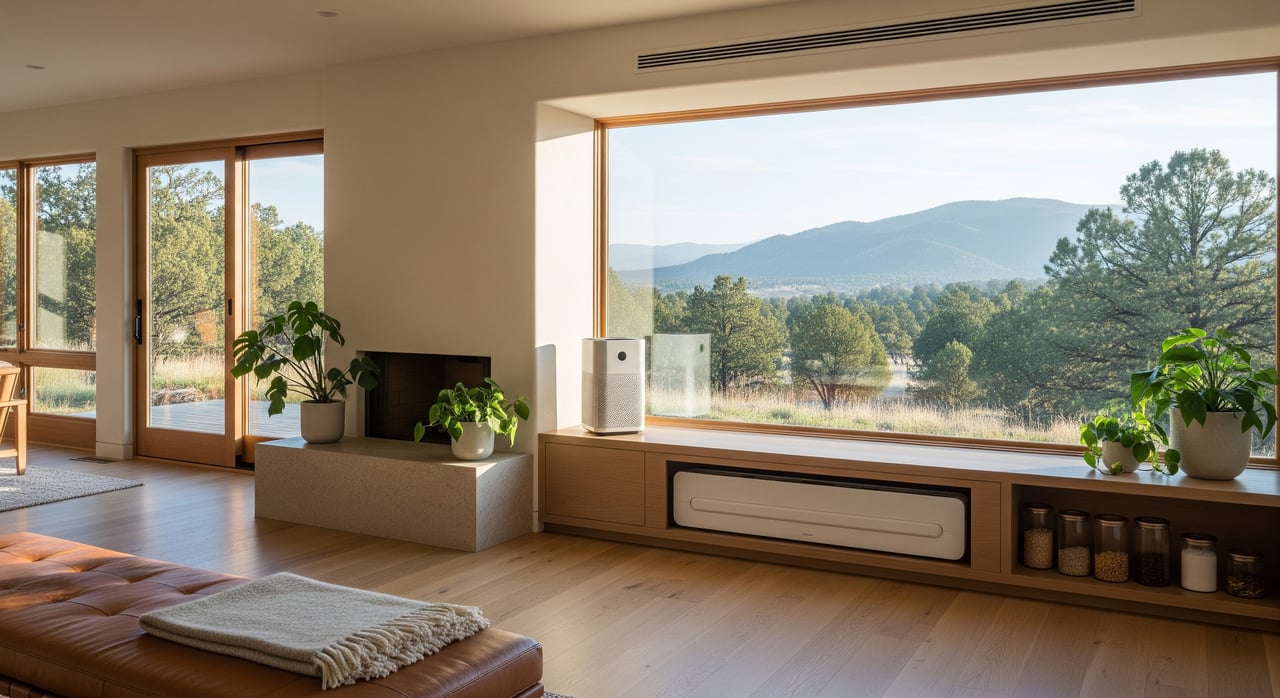
Wildfire Smoke Indoor Air Quality Solutions for Louisville Homes
November 6, 2025
November 6, 2025
When the Front Range skies turn hazy, the air inside your home matters more than ever. You want a simple plan you can trust, not a maze of technical advice. This guide gives you clear steps to keep your Louisville home’s air cleaner during wildfire smoke, from easy same‑day fixes to smart upgrades that add comfort and value. You’ll learn how to set up a clean‑air room, choose the right filters, dial in your HVAC, and avoid common pitfalls. Let’s dive in.
Wildfire smoke carries tiny particles called PM2.5 that can get deep into your lungs. These particles drive most health concerns during smoke events. Children, older adults, pregnant people, and anyone with heart or lung conditions are more vulnerable. Pets can be affected too.
During fire season, check air quality often. You can track conditions with the AirNow real‑time AQI, and follow updates from Colorado and local public health agencies. For health guidance on smoke exposure, review the CDC wildfire smoke tips.
A clean‑air room is a single, closed space where you keep air as clear as possible during smoky periods.
Pick a room you use most, like your primary bedroom or main living space. Favor interior rooms with minimal exterior walls and windows. Smaller rooms clean faster and stay cleaner with the same air cleaner. A room with one closeable door makes sealing easier.
Close all windows and exterior doors. Seal gaps around the door with a towel or temporary weatherstripping. Use painter’s tape or window plastic on obvious leaks. Close fireplace dampers and cover unused exhausts or vents if possible.
Aim for about 4 to 6 air changes per hour in the clean‑air room. Use Clean Air Delivery Rate (CADR) to size your portable air cleaner:
Check the air cleaner’s smoke CADR on the product label or manual. If the room is large, two smaller units can outperform one oversized unit.
Set the air cleaner near the space you occupy, with the intake and outlet clear. Avoid blocking doors or cramming it in a corner. Run it continuously at a setting that achieves your target CADR. Expect more noise on high, but faster reductions in PM2.5.
With windows closed, indoor humidity and heat can rise. Use your AC or a dehumidifier to stay comfortable and prevent moisture issues. Remember that portable HEPA cleaners do not cool or dehumidify, so coordinate with HVAC as needed.
You have three practical paths: true HEPA portable units, higher‑efficiency in‑duct filters, and a tested DIY option known as the Corsi‑Rosenthal box.
True HEPA traps at least 99.97% of particles at 0.3 microns, which targets PM2.5 from smoke. Choose a unit by matching the smoke CADR to your room size and desired air changes. Look for verified HEPA language, manageable filter costs, reasonable noise on higher speeds, and efficient operation. For consumer guidance, see ENERGY STAR recommendations for portable air cleaners.
Replace filters on schedule, and expect more frequent changes after heavy smoke days.
This low‑cost option uses a modern box fan with a fused plug plus four MERV‑13 filters taped into a cube. A well‑built unit can provide strong clean‑air delivery for a modest price, though results vary by build quality.
Build and use it safely:
Skip ozone generators and air cleaners that produce ozone or use unverified ionization claims. These can irritate lungs and do not address smoke effectively. The EPA Guide to Air Cleaners in the Home explains which technologies work for particles like PM2.5 and which to avoid.
Your furnace or air handler can help clean indoor air when used correctly.
MERV 13 filters capture a high fraction of PM2.5 and are commonly recommended for smoke mitigation in forced‑air systems. Many homes start with MERV 8 or lower. Higher MERV increases resistance to airflow, which can stress older systems or reduce performance.
Before upgrading, consult an HVAC professional. Options include a larger filter rack or a high‑efficiency media filter that keeps pressure drop manageable. Whole‑house HEPA is possible with the right equipment and pro installation.
During smoke events, set the fan to ON instead of AUTO so air moves through the filter continuously. This helps reduce indoor PM2.5 between outdoor smoke peaks. If your system brings in outdoor air through a fresh‑air intake, economizer, ERV, or HRV, set it to recirculation or turn off intake during heavy smoke. Check your equipment manual or call a pro if you are unsure.
Running the fan nonstop raises electricity use and noise. Higher‑MERV filters add resistance and can affect heating or cooling output on some equipment. During smoke, the health benefit typically outweighs these tradeoffs.
Use this punch‑list to protect your indoor air when smoke rolls in.
Some improvements deliver daily comfort and can appeal to future buyers in smoke‑prone regions.
Portable HEPA units are fast and flexible. Whole‑house solutions cost more but provide continuous, quiet protection across rooms. Running fans and higher‑MERV filters uses more electricity, but cleaner air during smoke events often justifies the cost.
Set up a simple monitoring routine so you know when to act. Check the AirNow AQI map and guidance several times a day during active smoke. Follow health advisories from Colorado and Boulder County public health channels. For consumer background on filtration and which technologies work, consult the EPA air cleaner guide and the CDC’s wildfire smoke tips.
Staying prepared is the easiest way to protect your daily routine and peace of mind. With a clean‑air room ready, the right filters on hand, and a simple HVAC plan, you can keep your Louisville home a calm, clean refuge when the skies turn smoky.
If you are weighing which upgrades will best support your lifestyle or future sale, let’s talk about your goals and timeline. Elevate Your Real Estate Journey with Unknown Company.
Stay up to date on the latest real estate trends.


Became an official country in 2001, and instantly differed from its neighbor, Boulder.
Get assistance in determining current property value, crafting a competitive offer, writing and negotiating a contract, and much more. Contact me today.